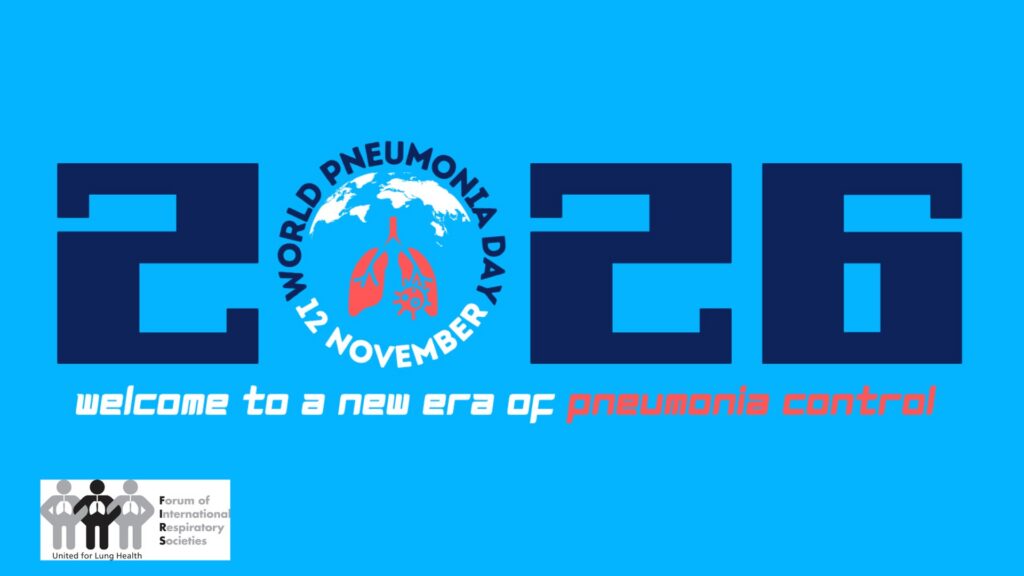
FIRS calls for action on World Pneumonia Day 2026
Pneumonia claimed an estimated 2.5 million lives globally in 2023, including 610,000 children under five. Despite being preventable and treatable, it remains a major cause of illness and death worldwide, particularly among young children and older adults.
On World Pneumonia Day, 12 November 2026, the Forum of International Respiratory Societies (FIRS), of which the Global Initiative for Asthma is a member, is calling for greater access to the vaccines, diagnostic tools and treatments that can prevent pneumonia and save lives.
This year’s theme, ‘A New Era of Pneumonia Control’, recognises the progress being made in pneumonia prevention, diagnosis and treatment. But new advances will only make a difference if they reach the people and communities at greatest risk.
The risk of pneumonia is closely linked to the conditions in which people live. Children affected by malnutrition, low vaccination coverage and household air pollution are particularly vulnerable. Almost half of all childhood pneumonia deaths are attributable to malnutrition.
Older adults also face significant risks. More than one in four pneumonia deaths among adults aged over 70 are attributable to air pollution and smoking. This underlines the need to address environmental risk factors as well as improve access to healthcare.
A new era of pneumonia control
Advances in pneumococcal conjugate vaccines (PCVs), new interventions to prevent respiratory syncytial virus (RSV), improved diagnostic technologies and better access to effective treatments offer important opportunities to reduce pneumonia deaths. Yet access to these advances remains unequal. Millions of children and adults still face barriers to vaccination, timely diagnosis, appropriate treatment and lifesaving oxygen therapy.
FIRS is calling on governments, healthcare organisations, global health partners and donors to take action to:
- Expand access to lifesaving vaccines: Improve coverage of pneumococcal conjugate vaccines (PCVs), and new RSV vaccines and long-acting monoclonal antibodies, as well as influenza vaccines
- Improve early diagnosis and treatment: Strengthen health systems so that people with pneumonia can be diagnosed promptly and receive appropriate treatment, including antibiotics and oxygen therapy when indicated
- Address the underlying risk factors: Tackle malnutrition, household and outdoor air pollution, tobacco exposure and gaps in immunisation.
- Protect those most at risk: Prioritise prevention and care for children under five, older adults and people living with underlying respiratory conditions.
- Support research and innovation: Invest in the development of affordable vaccines, diagnostic tools and treatments, and ensure these are accessible in low- and middle-income countries.
- Strengthen health systems: Equip and train healthcare workers to prevent, recognise and manage pneumonia effectively.
Pneumonia continues to take millions of lives despite the availability of effective ways to prevent and treat it. Scientific progress has brought new possibilities, but access to these advances remains out of reach for too many people. FIRS urges governments and global health partners to make pneumonia prevention, early diagnosis and effective treatment a priority, with particular attention to communities facing the greatest barriers to care.
About the Forum of International Respiratory Societies (FIRS)
The Forum of International Respiratory Societies (FIRS) brings together the world’s leading international respiratory societies with the aim of working towards better lung health at a global level. Through the experience and joint work of its more than 100,000 members worldwide, FIRS represents a collective voice in defense of respiratory health and promotes actions to improve the lung health of all people.
The Forum of International Respiratory Societies (FIRS) is an organisation comprised of the world’s leading international respiratory societies working together to improve lung health globally: American College of Chest Physicians (CHEST), American Thoracic Society (ATS), Asian Pacific Society of Respirology (APSR), Asociación Latino Americana De Tórax(ALAT), European Respiratory Society (ERS), International Union Against Tuberculosis and Lung Diseases (The Union), Pan African Thoracic Society (PATS), Global Initiative for Asthma (GINA), and the Global Initiative for Chronic Obstructive Lung Disease (GOLD).
The goal of FIRS is to unify and enhance efforts to improve lung health through the combined work of its more than 100,000 members globally.
For more information about FIRS please contact Helen Dugdale at helen.dugdale@firsnet.org.
For more information on World Pneumonia Day, visit: https://stoppneumonia.org/latest/world-pneumonia-day/ All data cited are from the Global Burden of Disease Study 2023 (GBD 2023), from the Institute for Health Metrics and Evaluation (IHME), University of Washington, Seattle, United States.
